How Do You Know If a Skin Supplement Is Actually Working?
Share

When someone introduces a nutritional supplement alongside skincare or aesthetic treatments, a simple question often follows:
How do you know if it is actually working?
Skin is influenced by far more than one product. Skincare, professional treatments, diet, sleep, hydration, stress, hormones and everyday lifestyle can all affect how it looks and feels.
That makes it difficult to attribute an improvement to one intervention alone.
And efficacy is only part of the question. A supplement should also make sense within the wider diet, be appropriate for the person taking it, and be considered in terms of quality and long-term safety.
A useful starting point: a supplement should complement a good diet, not replace it. The more realistic question is often whether nutrition, skincare, lifestyle and professional treatment are working together consistently over time.
Start With Food First
For most people, the foundation of good nutrition should be a varied and balanced diet.
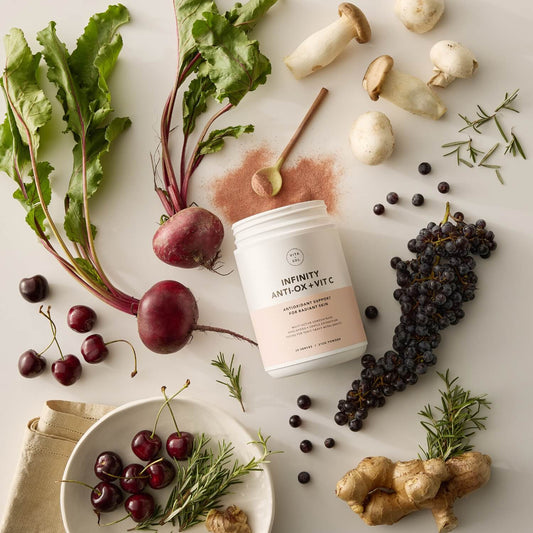
Wholefoods provide nutrients as part of a wider nutritional matrix that can include fibre, protein, fats, vitamins, minerals and naturally occurring plant compounds.
A supplement should therefore be viewed as exactly that: something that supplements the diet.
This food-first philosophy sits at the heart of Vita-Sol’s approach. Rather than assuming that more individual ingredients must be better, we look at the formulation as a whole: ingredient quality, provenance, complementary nutrients and what is actually necessary within the finished product.
You can explore this philosophy in more detail in our guide to wholefood supplements.
Nothing Unnecessary. Just as Nature Intended.
Vita-Sol formulations are built around carefully selected wholefood ingredients, without fillers or bulking agents, emulsifiers or solubilisers, added sugar, or artificial colours, flavours and preservatives.
Start With a Baseline
If you want to understand whether the skin is changing, it helps to know where you started.
In clinic, Dr Steph begins by establishing a baseline. This might involve consistent photographs, notes on how the skin looks and feels, practitioner assessment or more structured skin imaging.
Dr Steph uses the OBSERV 520x alongside her own in-person assessment. The technology provides a consistent reference point; the clinical judgement comes from interpreting those observations in the context of the patient, their skincare, treatments and lifestyle.
Dr Steph: “We take objective images using the OBSERV 520x device. I also assess the skin in person to look at the changes I can see.”
Decide What You Are Actually Looking For
“Better skin” is vague.
A more useful approach is to decide which changes you actually want to monitor.
In clinic, Dr Steph may look at:
- hydration
- redness
- pigmentation
- skin texture
- Skin thickness
- oil production
A patient may also notice changes that are harder to capture during one appointment, such as how smooth the skin feels or whether particular concerns occur less frequently.
The aim is to identify a few relevant markers and follow them consistently over time.
Skin Does Not Behave the Same Way Every Day
Sleep, hydration, alcohol intake, stress, diet and changes in routine can all affect how the skin presents on a particular day.
For that reason, Dr Steph does not rely on a photograph, scan or single consultation alone.
Dr Steph: “Both are important because skin changes daily depending on lifestyle. I may see someone on a ‘bad’ skin day, but overall they may tell me they have fewer breakouts or that their skin feels much smoother. If I can’t see the changes they describe, I’ll often review them again a few weeks later.”
Practical takeaway: one good skin day does not prove something is working, and one bad skin day does not prove that it is not. Patterns over time are more informative.
Objective Measures Matter — But So Does Personal Experience
Imaging and practitioner assessment can help document visible changes more consistently, but the person living with their skin may notice things that are difficult to capture during one consultation.
Dr Steph considers both. Objective observations provide useful reference points, while the patient’s own experience adds context that an image alone cannot always provide.
For a broader look at how nutrition and lifestyle fit into skin health, read our guide to foods and nutrition for healthy skin.
Skin Health Rarely Comes Down to One Thing
A patient may introduce nutritional support while also changing skincare, undergoing professional treatment, improving their diet or experiencing changes in stress, sleep or hormones.
Trying to separate each variable perfectly is often unrealistic.
Dr Steph: “It is almost impossible to isolate exactly what is doing what. We need to look at the skin from different angles rather than expecting one intervention to do everything.”
That changes the question from:
“Which product caused this?”
to:
“Is the overall approach producing a more consistent improvement over time?”
Seeing an improvement after starting a supplement does not automatically prove that the supplement caused it. The same applies to skincare products, aesthetic treatments and lifestyle changes.
Safety Matters Too
There is often an assumption that because vitamins, minerals or antioxidants occur naturally in food, taking them in larger supplemental amounts must automatically be beneficial.
That is not necessarily the case.
Supplement effects can depend on the nutrient, dose, combination, duration of use and the person taking it.
One example is the long-running SU.VI.MAX trial, which tested a combination of vitamin C, vitamin E, beta-carotene, selenium and zinc over a median of 7.5 years. The study produced different findings in men and women, including a higher incidence of skin cancer among women receiving the antioxidant combination during the intervention period.
The lesson is not that antioxidant supplements are inherently harmful. It is that more is not automatically better, and long-term safety deserves the same attention as short-term efficacy.
You can read more through the skin cancer analysis from the SU.VI.MAX trial and the National Cancer Institute overview of antioxidants and cancer prevention.
Why this matters: supplement quality is not just about what appears on the label. Dose, formulation, duration of use and whether supplementation is appropriate for the individual all matter.
Look at the Formulation, Not Just the Headline Ingredient
Two supplements can contain the same headline ingredient and still be very different products.
It is worth considering:
- the source and quality of the ingredients
- the amounts provided
- how different ingredients have been combined
- whether the formulation is appropriate for its intended use
- what additional ingredients have been included
- whether anything unnecessary has been added
This is where Vita-Sol’s Thoughtful Formulation philosophy comes in: looking at ingredient quality, provenance, complementary nutrients and what has deliberately been left out, rather than relying on one fashionable ingredient or an unnecessarily long ingredient list.
Where Vita-Sol Fits
Vita-Sol’s starting point is food first. Where additional nutritional support is appropriate, different formulations can sit within a wider skin-health and healthy-ageing routine.
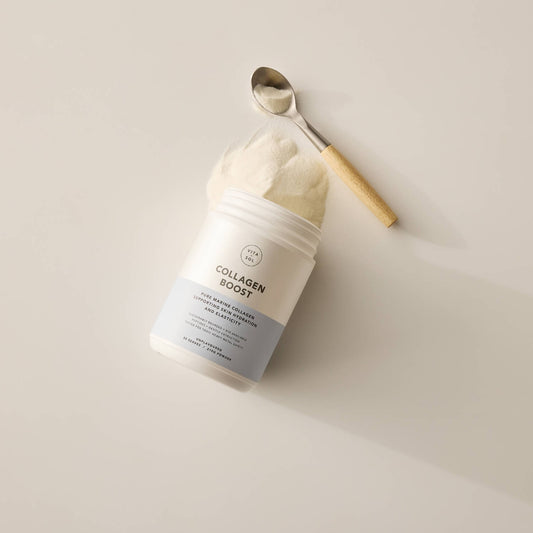
Collagen Boost provides hydrolysed marine collagen peptides within a simple formulation.
Purity Greens brings together wholefood plant ingredients and prebiotic fibre, with an emphasis on increasing plant diversity alongside an already varied diet.
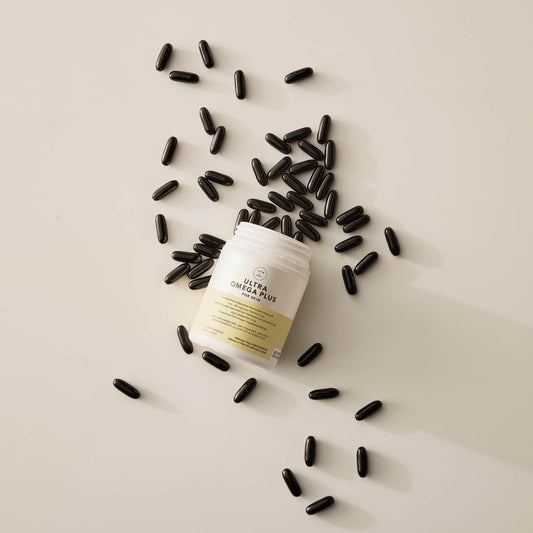
Ultra Omega Plus For Skin combines omega-3 EPA and DHA with astaxanthin and sea buckthorn as part of Vita-Sol’s wider skin-health and healthy-ageing approach.
Organic Plant Protein Vanilla combines sprouted fermented pea protein with sprouted brown rice protein to provide a complete amino-acid profile, with 24.5g of protein per serve and no fillers, bulking agents, emulsifiers or added sugar.
Vita-Sol’s approach
The goal is not to credit one product with every visible change. It is to use thoughtfully formulated nutritional support alongside good food, skincare, professional treatment and lifestyle where appropriate.
Give It Enough Time
Skin changes are rarely best judged after a few days. Planned review points can be more useful than checking constantly.
A simple approach: Baseline → several weeks → further review.
Keeping the rest of the routine reasonably consistent where possible can also make changes easier to interpret.
Dr Steph’s View: Think in Combinations, Not Isolation
For Dr Steph, nutrition, skincare, professional treatments and lifestyle are not competing approaches. The question is how they can work together consistently for the individual.
Dr Steph: “For me, it is always a combination approach.”
Professional skincare supports the outside. Nutrition contributes to the wider nutritional environment from within. Neither needs to be positioned as the single answer.
If you would like to explore those wider connections in more detail, read our guide to the Gut–Liver–Skin Axis.
So, How Do You Know If a Skin Supplement Is Working?
You may never be able to say with certainty that one supplement alone caused a particular visible change.
A more useful approach is to establish a baseline, decide what you want to monitor, give the routine enough time, consider the wider diet and lifestyle, and look at formulation quality rather than the headline ingredient alone.
Perhaps the better question is not:
“Did this one supplement cause the improvement?”
But:
“Are nutrition, skincare, professional treatments and lifestyle working together consistently to support better skin over time — and is the nutritional approach one that makes sense for me?”
Want to know more about the thinking behind Vita-Sol?
Explore our story, our food-first philosophy and the approach behind our wholefood formulations.
Discover the Vita-Sol StoryThis article is for educational purposes and is not intended to replace personalised medical or nutritional advice. If you have specific health concerns, take medication, are pregnant or breastfeeding, or are considering higher-dose supplementation, speak with an appropriate healthcare professional.