Marine Collagen vs Bovine Collagen: Which Is Better for Skin?
Share

Marine Collagen vs Bovine Collagen: Which Is Better for Skin?
If you've spent any time looking at collagen supplements, you've likely come across two main options: marine collagen and bovine collagen. Both claim impressive skin benefits, and both have genuine science behind them. But they are not the same and for skin specifically, the differences matter.
This guide breaks down exactly what separates marine collagen from bovine collagen, which one delivers better results for skin hydration, elasticity and healthy ageing, and how to choose the right supplement for your goals. If you want the bigger picture first, our guide to the best supplements for glowing skin covers where collagen fits alongside antioxidants, omega-3s and gut health.
What Is Collagen and Why Does It Matter?
Collagen is the most abundant protein in the human body, making up around 30% of total protein content. It is the structural foundation of your skin, hair, nails, joints and connective tissue. Think of it as the scaffolding that keeps your skin firm, plump and resilient.
The challenge is that from your mid-twenties onward, your body's natural collagen production declines by approximately 1 to 1.5% every year. By your forties and fifties, this loss becomes visible in the form of fine lines, loss of elasticity, drier skin and duller complexion. This is where collagen supplementation comes in. This decline tends to accelerate through perimenopause, when the body's changing protein needs place extra demand on the nutrients that keep skin firm.
There are over 16 types of collagen in the body, but the three most relevant to supplementation are:
Type I - the most abundant type, responsible for skin, hair, nails and tendons. This is the primary target for skin health.
Type II - found mainly in cartilage, best known for joint support.
Type III - found alongside Type I in skin and organs, supporting skin elasticity and blood vessel health.
What Is Marine Collagen?
Marine collagen is derived from fish, typically from the skin and scales of wild-caught fish. What would otherwise be discarded during seafood processing is instead cleaned, hydrolysed (broken down into smaller peptides) and dried into a powder. The result is a highly bioavailable collagen peptide supplement that is primarily rich in Type I collagen, exactly the type your skin needs most.
The defining characteristic of marine collagen is its exceptionally small peptide size. Because the molecules are smaller, they are absorbed into the bloodstream more efficiently. Research suggests marine collagen is absorbed up to 1.5 times more effectively than bovine sources.
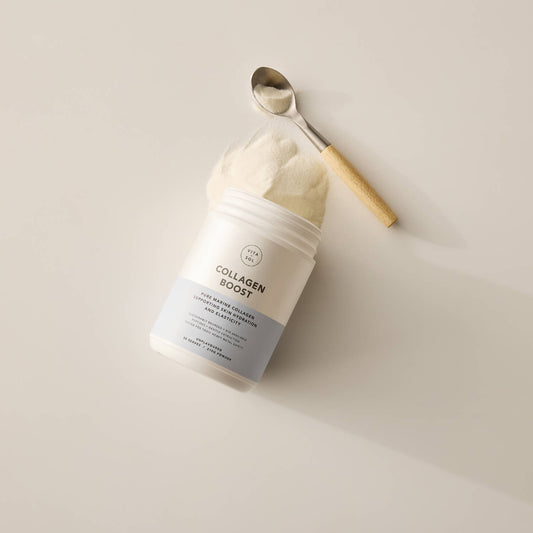
Vita-Sol's Collagen Boost uses 100% hydrolysed wild-caught marine collagen peptides from the North Atlantic a flavourless, single-ingredient formula with no fillers, binders or synthetics.
What Is Bovine Collagen?
Bovine collagen is derived from the hides, bones and cartilage of cattle. It is the more established of the two supplement types and has been commercially available for longer. Unlike marine collagen, bovine collagen contains a combination of Type I and Type III collagen, making it a broader, more comprehensive option for overall structural health.
Bovine collagen is particularly valued for its glycine and proline content, amino acids that play an important role in joint repair, muscle tissue health and gut lining integrity. This makes it a popular choice for athletes or those with joint concerns, as well as for skin goals. Because gut integrity and skin condition are closely connected, supporting the gut can indirectly support skin clarity too — see our guide on signs your gut health is affecting your skin.
Marine Collagen vs Bovine Collagen: The Key Differences
1. Absorption and Bioavailability
This is where marine collagen holds a clear advantage. Its smaller molecular weight allows it to pass through the intestinal wall more readily, meaning more of the supplement reaches the target tissues your skin, hair and nails. For skin-specific goals, this superior absorption makes a meaningful practical difference.
2. Collagen Type and Skin Focus
Marine collagen is almost exclusively Type I, the dominant collagen type in human skin (which is 85-90% Type I). This concentrated focus makes it highly targeted for skin hydration, elasticity and anti-ageing benefits. Bovine collagen provides Types I and III, which offers broader coverage but with less specific skin focus.
3. Clinical Evidence for Skin
Clinical research specifically for skin outcomes is more established for marine collagen. Studies have demonstrated that marine collagen peptides can increase skin hydration by up to 28% and reduce wrinkle depth by around 20% after 90 days of consistent supplementation. A landmark study of women aged 35-55 found significant improvements in skin elasticity and texture from daily marine collagen use.
In an independent 8-week Dermatest GmbH clinical study on 20 women aged 40-55 with dry skin, daily use of a 3 kDa marine collagen peptide powder increased average facial skin moisture by 34.77%, with dermatologists confirming the product was very well tolerated throughout with no adverse skin reactions (view the full clinical study).
4. Sustainability
Both sources can be sustainably produced. Marine collagen sourced from wild-caught fish is widely considered one of the more environmentally responsible supplement options it transforms what would be discarded waste from the fishing industry into a functional ingredient. Bovine collagen sourced from grass-fed, pasture-raised cattle is the more sustainable bovine option.
5. Dietary Suitability
Marine collagen is suitable for pescatarians and those following halal diets. Bovine collagen is suitable for those who do not eat fish. Neither is suitable for vegans or vegetarians. If you have a shellfish allergy, note that marine collagen derived from fish (not shellfish) is generally considered safe, but always check the source with the manufacturer.
So Which Is Better for Skin?
For skin-specific goals hydration, elasticity, fine lines, radiance and anti-ageing marine collagen is the stronger choice. Its superior absorption, concentrated Type I content and more targeted clinical evidence for skin outcomes make it the preferred option for those whose primary concern is their complexion.
Bovine collagen is an excellent all-rounder for those seeking broader structural benefits particularly for joints, gut health and muscle recovery alongside skin support. If your goals span multiple areas, bovine or a combination approach may be worth considering.
The honest answer is: it depends on your primary goal. For skin marine wins. For joints and overall structural health bovine is the stronger contender.
Frequently Asked Questions
Is marine collagen better than bovine collagen for skin?
For skin specifically, yes. Marine collagen is richer in Type I collagen the dominant type in human skin and is absorbed more efficiently due to its smaller molecular size. Clinical studies support its effectiveness for improving skin hydration, elasticity and reducing the appearance of fine lines.
How long does marine collagen take to work?
Most clinical studies show measurable improvements in skin hydration and elasticity within 8-12 weeks of daily supplementation. Hair and nail benefits typically take longer around 3-6 months of consistent use.
Can I take marine collagen every day?
Yes. Daily supplementation is both safe and recommended. Most clinical studies are based on daily intake, and consistent daily use is what delivers the cumulative skin benefits. Marine collagen is best taken on an empty stomach for maximum absorption.
Is marine collagen suitable for pescatarians?
Yes. Marine collagen is derived from fish and is suitable for pescatarians. It is not suitable for vegetarians or vegans. Bovine collagen is a better option for those who avoid fish but consume other animal products.